
Global Company Formation: Navigating Legal Complexities


Launching a fintech or crypto venture in Europe brings bold ambitions, but expanding internationally reveals a complex maze of compliance and legal requirements. The right global company formation strategy helps shield personal wealth through a business association with legal personality, while enabling operations across borders without exposing founders to unnecessary risks. This introduction guides you through the essential choices and pitfalls that matter when building a legally compliant structure for international business, offering clarity amid fast-changing regulations.
Table of Contents
Key Takeaways
Point | Details |
Global Company Formation | Establishing a legally recognised business entity across different jurisdictions is essential for international operations and regulatory compliance. |
Liability Protection | Choosing the right legal entity shields personal assets from business debts, making it crucial for fintech and crypto startups. |
Regulatory Compliance | Each jurisdiction has distinct regulatory frameworks; understanding these is vital to avoid conflicts and ensure smooth operations. |
Operational Procedures | Clear manuals for each jurisdiction are necessary to manage practical challenges and maintain compliance effectively. |
Global company formation defined and explained
Global company formation refers to the process of establishing a legally recognised business entity across different jurisdictions, enabling entrepreneurs to operate internationally whilst maintaining regulatory compliance. At its core, a company is a business association with legal personality that exists separately from its owners. This distinction matters enormously for fintech and crypto startups. Your company owns property in its own name, enters into contracts independently, and shields you from personal liability for the organisation’s debts or legal obligations. Unlike sole proprietorships or partnerships, where your personal assets remain vulnerable, a formally incorporated company creates a legal firewall between your business risks and personal wealth.
The formation process involves submitting constitutional documents to relevant government authorities and receiving a certificate of incorporation. These documents, including memoranda of association and articles of association, govern how your company operates internally and externally. For crypto firms and fintech startups operating across borders, this process becomes significantly more complex. You must navigate different regulatory frameworks in each target market, understand how local jurisdictions treat digital assets and financial services, and ensure your corporate structure aligns with compliance requirements across multiple regions. The stakes are high: improper formation can result in regulatory rejection, operational shutdowns, or unexpected personal liability exposure.
What distinguishes global company formation from domestic incorporation is the compounding legal complexity. When you engage in international business, you must navigate diverse tax systems, licencing requirements, AML/KYC safeguards, and anti-money laundering protocols that vary significantly between jurisdictions. A fintech startup might establish its holding company in one jurisdiction for tax efficiency, whilst obtaining a crypto operating licence in another where regulators are more established (such as Georgia or Seychelles), and creating subsidiary entities in Europe to serve EU customers under MiCA compliance. This multi-layered approach requires careful structural planning from day one.
Effective global company formation means choosing the right legal entities, sequencing their establishment strategically, and ensuring each component of your corporate structure serves both operational and compliance objectives. Rather than defaulting to common choices, your formation strategy should reflect your specific business model, target markets, funding requirements, and regulatory obligations.
Professional advice When establishing multiple entities across jurisdictions, document the operational purpose of each entity clearly from inception, as regulators increasingly scrutinise corporate structures to ensure they reflect genuine business operations rather than artificial tax avoidance schemes.
Types of entities and jurisdictional differences
The legal structure you choose for your fintech or crypto startup fundamentally shapes your liability exposure, tax obligations, regulatory compliance requirements, and operational flexibility. Different jurisdictions recognise entirely different entity types, and their legal characteristics vary dramatically. A limited liability company (LLC) in the United States operates under completely different rules than a private company limited by shares in the United Kingdom, even though both provide limited liability protection. Understanding legal entity types across different countries reveals how jurisdictional legal systems fundamentally shape the nature and formation of business entities. The entity you select must align not only with where you operate, but also with how regulators in your target markets treat that specific structure.
The core distinction centres on liability and legal personality. Companies provide limited liability and perpetual existence, meaning your personal assets remain protected from business debts and lawsuits. Partnerships, by contrast, often lack separate legal personality and expose owners to personal liability. For crypto and fintech founders, this distinction matters critically. If regulators later challenge your business model or a compliance failure occurs, limited liability protection shields your personal wealth. However, liability protection rules differ across jurisdictions. Some jurisdictions pierce the corporate veil more readily than others, meaning courts may hold owners personally liable if they use the entity to evade obligations or engage in fraud.
Jurisdictional differences extend far beyond liability. Consider three common scenarios: A holding company established in the British Virgin Islands might own a crypto operating company licensed in Seychelles, which in turn owns a European subsidiary complying with MiCA regulations. Each entity operates under different legal frameworks. The BVI holding company benefits from tax efficiency and privacy protections. The Seychelles operating company provides regulatory credibility for crypto activities. The European subsidiary enables direct customer acquisition under familiar regulatory oversight. Yet each jurisdiction imposes different formation costs, compliance burdens, reporting requirements, and ongoing maintenance obligations. Your formation strategy must account for these cascading differences rather than treating all entities as interchangeable.
Tax residency rules, regulatory recognition, and operational requirements also vary significantly. Some jurisdictions tax based on where you incorporate, others on where you conduct business. Some recognise American-style LLCs, others do not. Some permit fully remote company management, others require registered offices and physical company secretaries. When establishing a global corporate structure, you cannot simply replicate a structure that works in one market into another. Each jurisdiction demands its own tailored approach.

Here is a comparison of typical business entity types used in global company formation and their core attributes:
Entity Type | Legal Personality | Liability Protection | Common Jurisdictions |
Limited Company | Separate from owner | Shields personal assets | UK, Hong Kong, Singapore |
LLC | Separate from owner | Flexible liability limits | USA, BVI, Cayman Islands |
Partnership | Shared or none | Owners face direct risks | France, Germany, Australia |
Joint Venture | Usually separate | Defined by contract | China, UAE, India |
Professional tip Map your entire corporate structure before forming any entity, identifying which jurisdiction each entity should occupy based on its specific operational purpose, tax implications, and regulatory function, ensuring alignment with your compliance obligations across all markets where you operate.
Legal frameworks and regulatory compliance
Every jurisdiction where you operate imposes its own legal framework, and these frameworks rarely align perfectly. Your fintech or crypto startup must comply with regulations in every market where you accept customers, process transactions, or hold assets. This creates a fundamental challenge: regulations in one jurisdiction may directly conflict with those in another. For example, some countries prohibit certain cryptocurrency activities entirely whilst others actively encourage blockchain innovation. The European Union’s Markets in Crypto Assets Regulation (MiCA) imposes strict capital requirements and governance standards that differ fundamentally from Seychelles licensing requirements. You cannot design a single compliance programme and deploy it globally. Instead, you must map regulations across each target market, identify conflicts, and build operating procedures that satisfy the most stringent requirements across all jurisdictions simultaneously.
Governments design and enforce smart, streamlined regulations intended to meet contemporary global challenges whilst supporting business compliance and protecting public interests. However, the quality and consistency of these regulatory frameworks varies enormously. Developing markets and emerging economies often feature less established regulatory infrastructure, which creates both opportunity and risk. Less regulation means faster approval processes for your company formation and licensing, but it also means less regulatory clarity, more discretionary enforcement, and greater vulnerability to sudden regulatory changes. Established markets like the United Kingdom, Germany, and Luxembourg provide clear regulatory frameworks, established compliance precedents, and predictable enforcement mechanisms. This clarity comes at a cost: formation takes longer and ongoing compliance burdens are higher.
The gap between regulation and actual compliance outcomes represents a critical practical reality. Regulatory compliance in a global context requires understanding enforcement mechanisms and risk-based approaches that achieve effective compliance rather than merely technical compliance. A fintech startup can technically satisfy licensing requirements in Curaçao or Anjouan whilst operating a business model that violates unwritten expectations in your customer’s home market. Regulators increasingly examine substance over form, meaning your corporate structure, ownership, and actual business activities must align with your stated compliance framework. Responsive regulatory frameworks acknowledge this reality and enable businesses to demonstrate genuine compliance through meaningful governance, transparent reporting, and verifiable risk controls rather than mere documentation.
Your formation strategy must anticipate compliance requirements from inception. This means selecting jurisdictions that align with your actual business model, establishing reporting and governance procedures that exceed minimum requirements, and building flexibility into your corporate structure to accommodate future regulatory changes. Compliance is not a box to tick after formation. It shapes every structural decision you make.
Compliance strategy Before forming any entity, conduct a detailed regulatory mapping across every jurisdiction where you intend to operate, identifying conflicting requirements and determining which jurisdiction’s standards your business must satisfy, then design your corporate structure to accommodate the most stringent compliance requirements from the outset.
Practical requirements and cross-border operations
Establishing a global company structure requires managing far more than legal documentation. You face tangible operational challenges that span customs procedures, banking relationships, tax reporting, employee management, and fund transfers across borders. These practical realities often catch founders off guard because they operate silently until something breaks. A crypto exchange might obtain all necessary licences only to discover that international payment processors won’t service accounts registered in certain jurisdictions. A fintech startup might establish entities perfectly aligned with regulations only to face customs delays when moving physical assets or equipment across borders. Understanding cross-border facilitation requirements including customs, transport, and streamlined procedures helps you anticipate these operational barriers before they disrupt your business.
Practical cross-border operations demand that you establish clear operational procedures for each jurisdiction where you maintain entities. This includes designating registered offices, appointing local directors or company secretaries (where required), maintaining statutory books and records in the correct format for each jurisdiction, and understanding local filing deadlines. Some jurisdictions require annual accounts to be filed and made public within specific timeframes. Others permit confidential reporting. Some demand quarterly tax filings, others annual. These seemingly administrative requirements carry real consequences. Miss a filing deadline in one jurisdiction and your company may face penalties, suspension of operating licences, or even dissolution. For crypto and fintech operators, a licence suspension in any jurisdiction can trigger cascading problems, as your other regulated entities may lose recognition when their parent company loses regulatory standing.
Cross-border banking presents particular challenges for fintech and crypto startups. International payment processors apply heightened scrutiny to businesses in regulated sectors, particularly those handling cryptocurrency or accepting customers globally. You cannot assume that securing a business bank account will be straightforward. Understanding legal, cultural, and regulatory landscapes through comprehensive due diligence proves essential when establishing banking relationships across jurisdictions. Your formation structure directly influences banking accessibility. A company registered in a jurisdiction with strong banking relationships and regulatory transparency will access banking services more readily than one in a jurisdiction perceived as high-risk. This creates a practical incentive to structure your primary operating entity in a jurisdiction known for strong financial infrastructure, even if other entities handle specific regulatory functions.
Tax compliance across borders compounds these operational demands. Different jurisdictions apply different rules for determining tax residency, calculating taxable income, and timing tax payments. Cross-border transactions between your entities may trigger transfer pricing requirements, demanding that you document and justify prices charged between related entities. Filing requirements may exist simultaneously in multiple countries for the same business activity. Without proper operational procedures, you risk double taxation, penalties, and regulatory investigation. Your global structure must therefore include clearly defined tax reporting procedures, professional tax advice in each jurisdiction, and timely preparation of required filings.
Operational planning Establish detailed operational manuals for each jurisdiction where you maintain entities, documenting filing deadlines, reporting requirements, banking procedures, and local compliance obligations, then assign clear responsibility for each task to prevent critical deadlines from being missed.
Risks, liabilities, and compliance pitfalls
Global company formation creates exposure to risks that domestic operations rarely encounter. These risks operate across three interconnected dimensions: regulatory penalties when compliance fails, personal liability when corporate structures collapse, and operational disruption when regulators intervene. Many founders underestimate these exposures because they focus on obtaining licences rather than maintaining compliance throughout their operational life. A crypto startup might secure a Seychelles operating licence successfully only to discover that its European subsidiary cannot operate under MiCA because the parent company’s jurisdictional registration triggers additional capital requirements. A fintech compliance officer might implement AML/KYC procedures perfectly in one jurisdiction only to face investigation because a different jurisdiction applies stricter beneficial ownership standards. Firms invest in compliance to mitigate potential large-scale liability exposure because the cost of compliance prevention is far lower than the cost of regulatory enforcement, criminal penalties, and reputational damage.
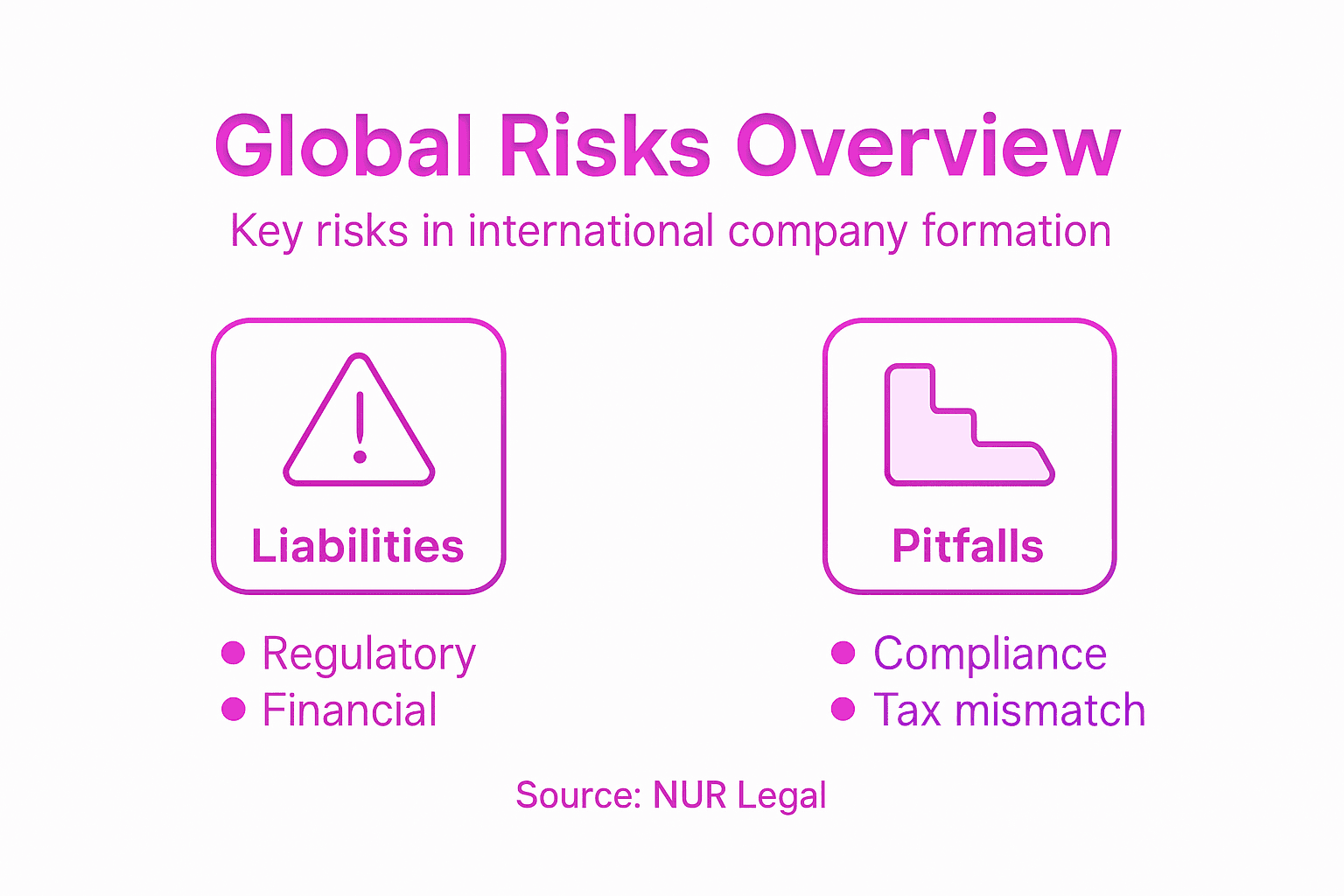
Liability exposure takes multiple forms, and each requires different mitigation strategies. Regulatory liability occurs when your business model or operations violate local laws. A blockchain company might operate legally in Georgia only to face enforcement action in the European Union under MiCA provisions that criminalise certain service offerings. Personal liability pierces your corporate structure when regulators determine that your entities lack genuine substance or that you deliberately structured them to evade compliance. Tax liability compounds when you fail to properly document inter-company transactions, triggering transfer pricing assessments and double taxation. Operational liability emerges from supply chain disruptions and geopolitical risks. Global value chains face regulatory and compliance risks including disruptions and dependencies that can interrupt critical business functions when regulations change suddenly or when a single jurisdiction alters its regulatory stance.
Common compliance pitfalls create avoidable disasters. Inadequate substance in offshore entities invites scrutiny and personal liability exposure when regulators investigate whether your structure reflects genuine business operations. Failing to maintain separate accounting and records for each entity creates confusion that regulators interpret as evidence of deliberate evasion. Inadequate governance documentation leaves you unable to demonstrate that decisions were made transparently and with proper authorisation. Failure to update corporate records when ownership or management changes creates compliance violations that compound over time. Cross-border payment failures—where entities cannot establish banking relationships due to jurisdictional restrictions—force you to restructure operations mid-stream, disrupting business continuity. These pitfalls are preventable through careful formation planning and rigorous ongoing compliance discipline.
Your formation strategy must anticipate these risks from inception. This means selecting jurisdictions that genuinely support your business model rather than offering tax benefits alone, ensuring each entity maintains clear operational purpose and genuine substance, establishing governance procedures that document decision-making, and implementing compliance monitoring that catches violations before regulators discover them. Compliance is not a one-time formation requirement. It is an ongoing operational obligation that shapes every major business decision.
Below is a summary of major compliance risks faced by global companies and the main strategies to mitigate them:
Compliance Risk | Potential Impact | Mitigation Strategy |
Regulatory conflicts | Licence suspension | Early regulatory mapping |
Tax residency disputes | Double taxation | Expert cross-border tax planning |
Banking restrictions | Payment processing delays | Choose reputable jurisdictions |
Substance requirements | Personal liability risks | Demonstrate genuine operations |
Risk mitigation Conduct a detailed liability assessment for your intended corporate structure before formation, identifying which risks apply to your specific business model and which entities face the greatest exposure, then implement monitoring procedures that track compliance across all jurisdictions simultaneously.
Master Global Company Formation with Trusted Legal Experts
Navigating the complex landscape of global company formation demands far more than just understanding legal documentation. Whether you are establishing entities across multiple jurisdictions or managing regulatory compliance for fintech and crypto startups, the risks of operational disruption and personal liability can be significant. You need precise, expert guidance to map regulatory differences, demonstrate genuine substance, and maintain seamless cross-border operations.
Partner with NUR Legal, specialists in corporate formation, licensing, and compliance for high-risk regulated industries. Benefit from our deep experience securing crypto licenses in Georgia and Seychelles or gaming licences in Curaçao and Anjouan at an affordable and efficient pace. Start shaping your compliant global structure today. Explore how our company formation solutions can empower your business to meet the most stringent compliance demands and avoid costly pitfalls. Contact us now for professional support that ensures your global ambitions are legally protected and operationally sound.
Frequently Asked Questions
What is global company formation?
Global company formation is the process of establishing a legally recognised business entity across different jurisdictions, allowing businesses to operate internationally while adhering to regulatory requirements.
Why is choosing the right legal structure important for fintech and crypto startups?
The legal structure affects liability exposure, tax obligations, regulatory compliance, and operational flexibility. Each jurisdiction has different legal entity types and associated characteristics that can significantly impact how the business operates.
How can regulatory compliance challenges affect global operations?
Regulatory compliance challenges arise when regulations in different jurisdictions conflict. Businesses must ensure their operations comply with the strictest standards across all markets, which can be complex and time-consuming.
What are common pitfalls in global company formation?
Common pitfalls include inadequate substance in offshore entities, failure to maintain separate accounting for each entity, and not updating corporate records. These issues can lead to compliance violations and potential liabilities.
Recommended


Comments