
Master the Legal Compliance Workflow for Global Licensing


Over 80 percent of British companies expanding abroad cite complex regulatory demands as their top challenge. Understanding every legal requirement is the difference between smooth entry and costly setbacks for your global operations. Whether your business touches fintech, gambling, cryptocurrency, or financial services, this guide spotlights the practical steps to master compliance, streamline documentation, and keep your licensing strategy ahead of shifting international standards.
Table of Contents
Quick Summary
Key Point | Explanation |
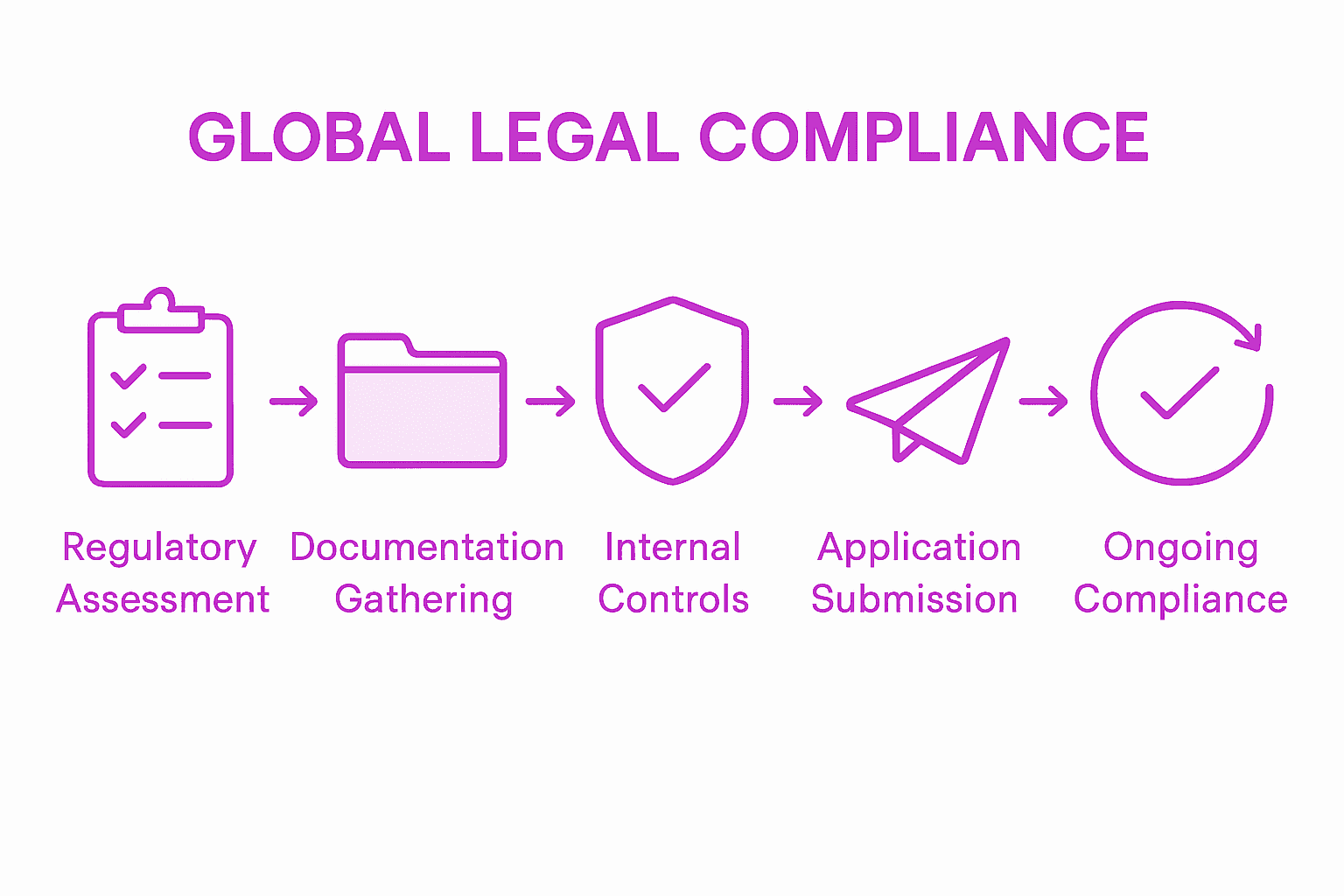
1. Assess Regulatory Requirements | A thorough regulatory audit is crucial for understanding compliance within your industry and jurisdiction. |
2. Compile Essential Documentation | Systematically prepare core and sector-specific documents to support your licensing applications. |
3. Implement Internal Controls | Develop robust internal policies and use technology to monitor compliance effectively. |
4. Lodge Applications Strategically | Ensure that submissions align closely with regulatory requirements to avoid delays in approval. |
5. Maintain Ongoing Compliance | Establish a system to track regulatory changes and compliance requirements continuously to uphold standards. |
Step 1: Assess Regulatory Requirements for Your Sector
Assessing regulatory requirements forms the foundational cornerstone of your global licensing strategy. This critical initial step involves systematically mapping out the complex legal landscape specific to your operational sector.
Start by conducting a comprehensive regulatory audit that examines the licensing and permitting frameworks governing your specific industry. Different sectors such as fintech, gambling, cryptocurrency, and financial services have distinct regulatory environments that demand precise understanding. Research the specific regulatory bodies, compliance standards, and legal prerequisites relevant to your business model. This means scrutinising local and international regulations, understanding jurisdictional variations, and identifying potential compliance challenges.
Your assessment should encompass multiple dimensions beyond surface level compliance. Analyse the technical requirements, documentation standards, financial thresholds, reporting obligations, and ongoing monitoring mechanisms. Pay special attention to risk management protocols, anti money laundering regulations, know your customer requirements, and sector specific licensing conditions. Regulatory simulation models suggest that adaptive approaches which anticipate potential regulatory shifts can significantly enhance your compliance strategy.
Professional Tip: Create a dynamic regulatory compliance matrix that tracks evolving legal requirements across different jurisdictions, updating it quarterly to maintain your organisation’s proactive regulatory stance.
The following table summarises key regulatory considerations for major global sectors:
Sector | Main Regulatory Focus | Typical Authorities | Notable Compliance Challenges |
Fintech | Financial regulations, KYC | Financial Conduct Authority | Evolving digital standards, cross-border inconsistencies |
Gambling | Licensing, AML compliance | Gambling Commission | Strict monitoring, advertising restrictions |
Cryptocurrency | Anti-money laundering, taxation | Central Banks, Financial Regulators | Rapid legal changes, uncertain jurisdiction |
Financial Services | Prudential rules, consumer protection | Financial Services Authority | Stringent financial thresholds, ongoing audits |
Step 2: Compile Essential Documentation and Evidence
Compiling essential documentation represents a critical phase in your global licensing workflow that demands meticulous attention to detail and comprehensive organisational preparation. This step transforms your regulatory compliance strategy from theoretical planning into practical execution.

Documentation compilation requires a systematic approach that goes beyond simply gathering paperwork. Developers’ licensing perspectives demonstrate that successful compliance hinges on creating a robust documentation ecosystem that captures every relevant operational detail. Begin by preparing core corporate documents such as articles of incorporation, shareholder registrations, business registration certificates, and comprehensive corporate governance frameworks. Your evidence collection should include financial statements, tax compliance records, beneficial ownership documentation, and detailed operational policies that demonstrate your organisation’s legal and ethical standing.
Extend your documentation strategy to include sector specific requirements. For technology driven sectors like fintech or software development, this means developing comprehensive licensing risk mitigation frameworks that capture intellectual property details, code licensing information, and compliance protocols. Ensure each document is authenticated, translated where necessary, and organised in a manner that enables rapid retrieval during regulatory reviews. Cross reference your documentation against the specific requirements of target jurisdictions to guarantee complete alignment with local regulatory expectations.
Professional Tip: Implement a digital document management system with version control and secure access protocols to streamline your evidence compilation process and maintain a transparent audit trail for regulatory inspections.
Step 3: Implement Internal Controls and Compliance Measures
Implementing internal controls and compliance measures transforms your regulatory strategy from a theoretical framework into a practical operational reality. This crucial step ensures your organisation builds robust safeguards that protect against potential legal and financial risks.
Enterprise legal management strategies provide a comprehensive approach to developing systematic internal control mechanisms. Your implementation should focus on creating a multifaceted compliance infrastructure that integrates technological solutions, clear governance protocols, and ongoing monitoring systems. Design comprehensive internal policies that outline specific procedures for regulatory adherence, including detailed guidelines for financial reporting, risk assessment, employee training, and documentation management. Establish clear reporting lines and accountability structures that enable rapid identification and resolution of potential compliance breaches.
Advance your compliance approach by leveraging regulatory technology solutions that automate and streamline complex monitoring processes. These technological interventions can help your organisation develop real time tracking of regulatory changes, implement automated compliance checks, and generate comprehensive audit trails. Pay particular attention to developing scalable systems that can adapt to evolving regulatory landscapes across different jurisdictions, ensuring your internal controls remain flexible and responsive to emerging legal requirements.
Professional Tip: Create a dedicated compliance review committee with cross functional representatives who meet quarterly to assess and update your organisation’s internal control frameworks, ensuring continuous improvement and proactive risk management.
Step 4: Lodge Applications with Relevant Authorities
Lodging applications with relevant authorities represents a critical milestone in your global licensing journey that requires precision meticulous preparation and strategic understanding of regulatory submission protocols. This step transforms your carefully compiled documentation into a formal regulatory engagement process.
Begin by thoroughly understanding the specific sector specific licensing and regulatory oversight requirements for your particular industry. Different regulatory bodies have unique submission frameworks that demand careful attention to detail. Carefully review each authority’s specific application guidelines and prepare a comprehensive submission package that addresses every potential information requirement. This means meticulously organising your documentation to demonstrate full compliance and providing clear supplementary evidence that supports your licensing objectives.
Each application submission requires a strategic approach that mirrors international regulatory harmonisation principles. Anticipate potential queries by developing comprehensive explanatory narratives that accompany your technical documentation. Ensure your application demonstrates not just technical compliance but a proactive commitment to regulatory standards. Consider preparing additional contextual information that provides regulators with a holistic understanding of your organisation’s operational approach and commitment to ongoing regulatory adherence.
Professional Tip: Create a standardised internal application tracking system that monitors each submitted application across different jurisdictions, recording submission dates, follow up requirements and potential response timelines to ensure systematic and organised regulatory engagement.
Step 5: Verify Approval and Maintain Ongoing Compliance
Verifying approval and maintaining ongoing compliance represents the final critical phase in your global licensing workflow that ensures sustainable regulatory adherence and operational legitimacy. This stage transforms your initial licensing efforts into a dynamic continuous management process.
Developing a professional regulatory workforce framework requires implementing systematic verification mechanisms that go beyond initial approval. Your ongoing compliance strategy should encompass regular internal audits, comprehensive documentation reviews, and proactive monitoring of regulatory changes. Establish a robust compliance management system that tracks all licensing requirements across different jurisdictions, creating automated alerts for renewal dates, reporting deadlines, and potential regulatory updates. This approach ensures your organisation remains consistently aligned with evolving legal standards.
Comprehensive software licensing compliance practices emphasise the importance of creating an adaptive compliance infrastructure. Design a multi layered verification process that includes periodic self assessments, external regulatory consultations, and continuous staff training programmes. Implement detailed record keeping protocols that document every compliance interaction, maintaining a transparent audit trail that demonstrates your organisation’s commitment to regulatory excellence. Pay particular attention to changes in regulatory landscapes that might impact your existing licensing conditions and be prepared to adapt your operational frameworks accordingly.
Professional Tip: Develop a centralised compliance dashboard that provides real time insights into your regulatory status, enabling quick identification of potential compliance gaps and facilitating rapid corrective actions.
Below is a comparison of digital tools that enhance global licensing workflows:
Tool Type | Primary Benefit | Example Functionality |
Regulatory Compliance Matrix | Tracks cross-border laws | Monitors regulation changes |
Document Management System | Organises key submissions | Secures corporate records |
Compliance Dashboard | Provides real-time oversight | Alerts for renewal deadlines |
Application Tracker | Monitors submission status | Records regulatory responses |
Ensure Seamless Global Licensing with Expert Legal Support
Navigating the intricate legal compliance workflow for global licensing can feel overwhelming. The challenges of assessing regulatory requirements, compiling detailed documentation, implementing internal controls, and lodging precise applications demand expert guidance. Whether you are in fintech, cryptocurrency, gambling, or other regulated sectors, overcoming shifting regulations and complex submission protocols is essential for your business success.
NUR Legal specialises in delivering tailored solutions that simplify these exact hurdles. With proven expertise in securing gaming licences in Curaçao and Anjouan, as well as crypto licences in Georgia and Seychelles, we provide you with strategic support to build and maintain robust compliance frameworks. Our dedicated team protects your interests through transparent processes, strong regulator relationships, and comprehensive ongoing compliance management.
Start your journey to flawless licensing now. Explore our professional legal consultancy services to gain clarity, speed, and confidence in your regulatory engagement. Visit NUR Legal today and let us help you master the global licensing landscape with efficiency and trust.
Frequently Asked Questions
How do I assess regulatory requirements for global licensing?
To assess regulatory requirements for global licensing, start by conducting a comprehensive regulatory audit specific to your operational sector. Identify the relevant regulatory bodies and compliance standards, and create a compliance matrix to track evolving legal requirements across different jurisdictions.
What essential documentation should I compile for licensing applications?
Compile core corporate documents such as articles of incorporation, financial statements, and tax compliance records. Organise these documents methodically to ensure quick retrieval during regulatory reviews, maintaining a clear record of all sector-specific requirements as well.
How can I implement effective internal controls for regulatory compliance?
Implement internal controls by creating detailed policies and procedures that outline compliance protocols, including financial reporting and employee training. Ensure these controls are adaptable to changing regulations by reviewing them quarterly to maintain regulatory adherence.
What steps should I follow when lodging applications with regulatory authorities?
When lodging applications, thoroughly understand the specific submission guidelines of the relevant regulatory bodies. Prepare a comprehensive submission package and ensure that all documentation is meticulously organised to demonstrate compliance with the stated requirements.
How can I verify approval and maintain ongoing compliance?
To verify approval, establish a robust compliance management system that tracks licensing requirements and includes regular internal audits. Create automated alerts for renewal dates and regulatory updates to ensure ongoing adherence to legal standards within your operations.
Recommended


Comments