
Role of Legal Opinions in Crypto Compliance


Regulatory confusion still plagues many british crypto startups, with over 60 percent struggling to secure clear legal guidance for compliance. The pace of innovation far outstrips current legal frameworks, leaving founders uncertain about risk and regulation. Understanding how legal opinions shape credibility and protect against costly mistakes is crucial for any crypto business aiming to stand out in the crowded international market.
Table of Contents
Key Takeaways
Point | Details |
Importance of Legal Opinions | Legal opinions help crypto businesses understand their legal standing and ensure regulatory compliance in a complex environment. |
Types of Legal Opinions | Critical categories include jurisdictional, regulatory compliance, and structural opinions, each serving specific strategic purposes. |
Compliance Requirements | Rigorous documentation is essential for crypto licence applications, focusing on AML, KYC, and financial transparency to secure regulatory approval. |
Risks of Inadequate Legal Assessment | Operating without strong legal opinions can expose businesses to significant regulatory risks and undermine credibility in the industry. |
Defining Legal Opinions for Crypto Businesses
In the complex world of cryptocurrency regulation, a legal opinion serves as a critical document providing authoritative guidance and professional interpretation of legal frameworks. Legal opinions fundamentally represent written explanations by legal experts that outline the legal standing, potential risks, and regulatory compliance status for crypto businesses.
Legal opinions in the cryptocurrency domain typically address several crucial aspects of business operations. These comprehensive documents analyse the legal implications of a company’s structure, assess regulatory compliance, evaluate potential jurisdictional challenges, and provide strategic recommendations for mitigating legal risks. Organisations leverage these expert assessments to understand their precise legal positioning within often ambiguous and rapidly evolving regulatory landscapes.
Crypto businesses seek legal opinions for multiple strategic purposes. These include obtaining international licences, demonstrating regulatory compliance to potential investors, navigating cross-border transaction frameworks, and establishing credibility with financial institutions. Legal opinion services help organisations proactively address potential legal vulnerabilities before they escalate into significant operational challenges.
Pro Tip - Legal Opinion Strategy: Always engage specialised legal professionals with demonstrated expertise in cryptocurrency regulatory frameworks to ensure comprehensive and nuanced legal assessments that anticipate potential future regulatory developments.
Main Types and Purposes of Crypto Legal Opinions
Cryptocurrency legal opinions encompass several distinct categories designed to address the complex regulatory landscape of digital assets. Jurisdictional legal opinions represent comprehensive assessments that evaluate a business’s legal standing within specific regulatory environments, critically analysing compliance requirements and potential regulatory risks associated with cryptocurrency operations.
Another crucial type is the regulatory compliance legal opinion, which provides an in-depth examination of a company’s adherence to existing financial regulations, anti-money laundering (AML) standards, and know-your-customer (KYC) protocols. These detailed documents help organisations understand compliance frameworks by identifying potential legal vulnerabilities and recommending strategic approaches to mitigate regulatory challenges.

Structural legal opinions offer critical insights into the legal implications of a cryptocurrency business’s organisational framework. These assessments examine corporate structures, evaluate potential liability risks, and provide strategic recommendations for establishing legally robust business models. Organisations often seek these opinions when expanding into new markets, restructuring operations, or preparing for significant financial transactions that require comprehensive legal understanding.
Pro Tip - Legal Analysis Strategy: Engage specialised cryptocurrency legal experts who maintain current knowledge of evolving international regulatory landscapes to ensure your legal opinion provides nuanced, forward-looking insights that anticipate potential regulatory developments.
The following table summarises the main types of crypto legal opinions and highlights their strategic use for businesses:
Type of Legal Opinion | Core Focus | Strategic Business Benefit |
Jurisdictional | Regional compliance evaluation | Enables entry into new markets confidently |
Regulatory Compliance | AML/KYC alignment assessment | Reduces regulatory fines and penalties |
Structural | Organisational structure analysis | Minimises corporate liability risks |
Regulatory Recognition and Jurisdictional Impact
Regulatory recognition represents a critical cornerstone for cryptocurrency businesses seeking to establish legitimate and compliant operational frameworks across international markets. Markets in Crypto-Assets (MiCA) regulations exemplify how jurisdictional frameworks are evolving to provide structured governance for digital asset ecosystems, establishing clear parameters for blockchain and distributed ledger technology implementations.
The complexity of jurisdictional impact becomes evident when organisations must navigate diverse regulatory landscapes. Different regions maintain substantially varied approaches to cryptocurrency regulation, requiring businesses to develop nuanced strategies for legal compliance. Crypto-Asset Reporting Frameworks demonstrate the international community’s increasing commitment to standardising information exchange, compelling crypto service providers to implement robust reporting mechanisms that transcend traditional geographical boundaries.
Jurisdictional legal opinions play a pivotal role in helping organisations understand and mitigate potential regulatory risks. These comprehensive assessments analyse local regulatory environments, evaluate potential compliance challenges, and provide strategic recommendations for navigating complex legal terrains. Businesses must consider multiple factors, including taxation policies, financial reporting requirements, anti-money laundering regulations, and investor protection standards when expanding into new markets.
Pro Tip - Jurisdictional Compliance Strategy: Continuously monitor regulatory developments across target markets and maintain flexible legal frameworks that can rapidly adapt to emerging compliance requirements, ensuring your cryptocurrency business remains agile and legally resilient.
Compliance Requirements for Crypto Licence Applications
Crypto licence applications demand rigorous documentation and comprehensive compliance frameworks that demonstrate an organisation’s commitment to regulatory standards. Navigating international licensing requirements involves preparing a complex portfolio of documentation that showcases the company’s operational integrity, financial stability, and robust risk management protocols.
The core compliance requirements typically encompass several critical dimensions. Anti-money laundering (AML) documentation is paramount, requiring detailed evidence of sophisticated transaction monitoring systems, customer verification processes, and comprehensive risk assessment methodologies. Organisations must also demonstrate substantial know-your-customer (KYC) capabilities, presenting intricate frameworks for identifying and verifying client identities, tracking financial transactions, and implementing stringent background screening mechanisms.
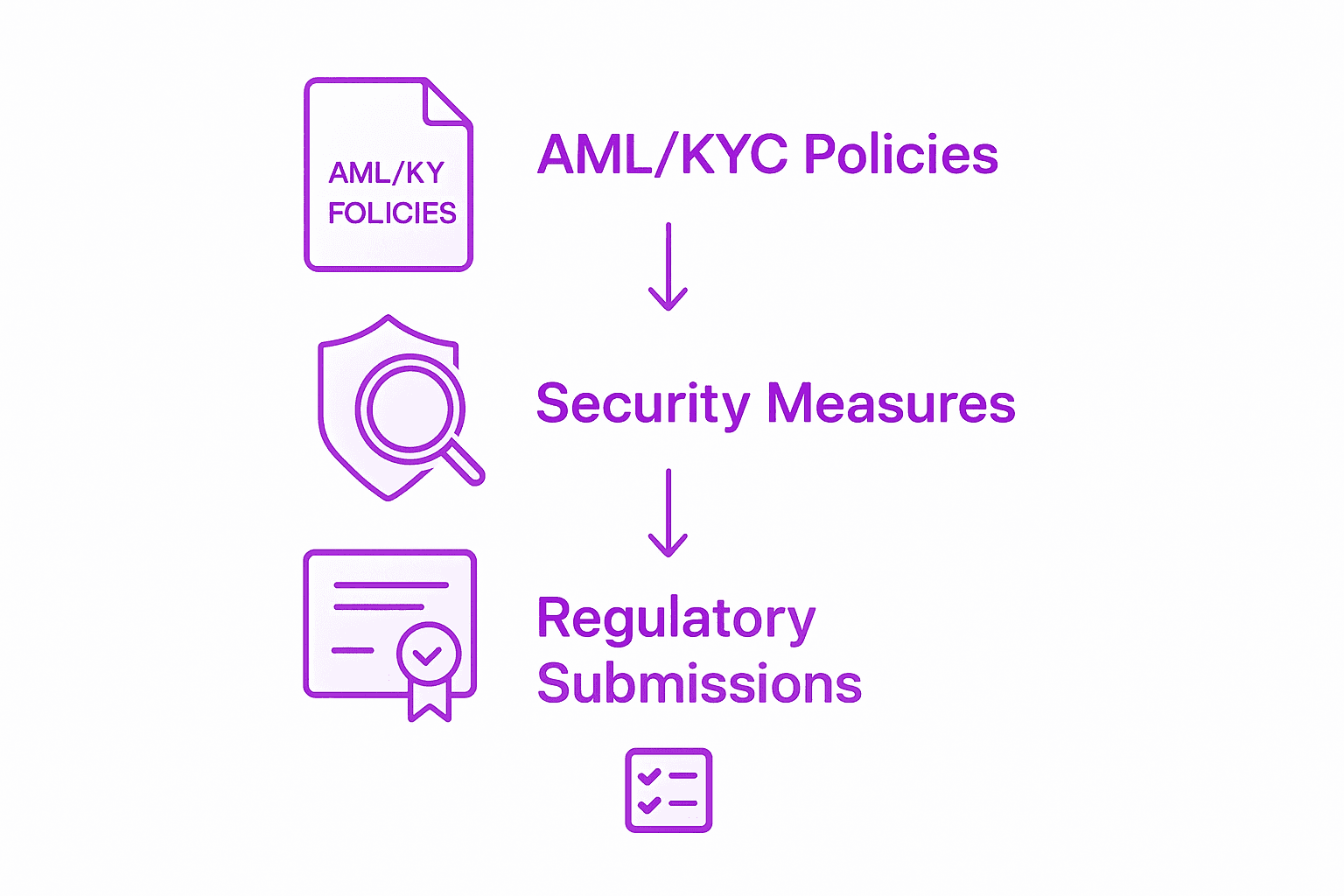
Financial regulators scrutinise licence applications through multiple lenses, assessing an organisation’s technological infrastructure, governance structures, and risk mitigation strategies. Applicants must prepare extensive documentation including detailed business plans, comprehensive cybersecurity protocols, capital adequacy proofs, and transparent ownership structures. These submissions require meticulous preparation, often involving legal consultants who understand the nuanced requirements of different jurisdictional frameworks and can strategically position the application for successful approval.
Pro Tip - Licence Application Strategy: Invest significant time in preparing a forensically detailed application that anticipates regulatory concerns, demonstrating proactive compliance and a sophisticated understanding of the complex legal landscape surrounding cryptocurrency operations.
This table outlines common licence compliance requirements and why each is critical for crypto businesses:
Compliance Area | Required Documentation | Regulatory Importance |
Anti-Money Laundering (AML) | Transaction monitoring evidence, risk assessment reports | Prevents illicit financial activities |
Know-Your-Customer (KYC) | Identity verification protocols, screening framework | Safeguards against fraud and crime |
Cybersecurity Measures | Security policy, incident response plans | Protects customer assets and data |
Financial Transparency | Capital adequacy statements, ownership disclosures | Demonstrates solvency and integrity |
Common Pitfalls and Legal Risks in Crypto Opinions
Operating without a comprehensive legal opinion exposes cryptocurrency businesses to significant regulatory and financial risks. The absence of robust legal documentation can lead to substantial penalties, potential criminal charges, and investor deterrence, fundamentally undermining an organisation’s credibility and operational legitimacy.
Cryptocurrency legal opinions involve complex risk assessment processes that require sophisticated expertise. Jurisdictional variations create intricate challenges, with legal frameworks differing dramatically across international boundaries. Common pitfalls include inadequate documentation of risk mitigation strategies, incomplete compliance frameworks, and failure to anticipate evolving regulatory landscapes. Organisations must recognise that legal opinions are sophisticated risk management tools that demand specialised interpretation and strategic implementation.
The most critical legal risks emerge from misunderstandings about the scope and limitations of legal opinions. Many organisations mistakenly view these documents as comprehensive insurance policies, when they are actually nuanced professional assessments designed to highlight potential regulatory vulnerabilities. Successful legal opinions require meticulous attention to detail, deep understanding of technological infrastructures, and comprehensive analysis of potential compliance challenges across multiple jurisdictional contexts.
Pro Tip - Risk Mitigation Strategy: Engage specialised legal professionals with demonstrable expertise in cryptocurrency regulations, ensuring your legal opinion provides a forensically detailed assessment that anticipates potential regulatory challenges and strategically positions your organisation for long-term compliance.
Secure Your Crypto Business With Expert Legal Opinions and Licensing Support
Navigating the complex regulatory landscape for cryptocurrency requires more than just understanding compliance terminology like AML, KYC and jurisdictional requirements. Many crypto businesses face risks from incomplete legal opinions or inadequate licence applications that can lead to costly penalties and operational setbacks. If you want to confidently enter new markets and establish legally compliant operations in this high-risk industry, specialised legal guidance is essential.
At NUR Legal, we provide tailored legal opinions and comprehensive licensing services designed specifically for crypto businesses aiming to thrive globally. Whether you need support with crypto licence acquisition in Georgia or Seychelles or require detailed legal assessments addressing jurisdictional challenges, our expert team has the knowledge and proven track record to protect your enterprise. Act now to secure your business’s future with a trusted partner who understands the nuances of crypto compliance inside out. Visit NUR Legal today to explore how our solutions can help you avoid regulatory pitfalls and succeed in regulated markets.
Frequently Asked Questions
What is the purpose of a legal opinion in the cryptocurrency sector?
A legal opinion in the cryptocurrency sector provides authoritative guidance on legal frameworks, assesses regulatory compliance, and outlines potential risks for crypto businesses. It helps organisations understand their legal standing in a complex regulatory environment.
How can a legal opinion help mitigate compliance risks for crypto businesses?
A legal opinion helps identify potential legal vulnerabilities and suggests strategic approaches to address regulatory challenges. This proactive assessment can significantly reduce the likelihood of penalties or operational disruptions related to compliance issues.
What types of legal opinions are essential for cryptocurrency businesses?
Essential types of legal opinions for cryptocurrency businesses include jurisdictional legal opinions, regulatory compliance opinions, and structural legal opinions. Each type focuses on different aspects of legal standing, compliance, and organisational structure, providing tailored insights for various business needs.
Why is it important to engage specialised legal professionals for crypto legal opinions?
Engaging specialised legal professionals ensures comprehensive assessment and nuanced understanding of evolving cryptocurrency regulations. These experts can anticipate future regulatory developments, providing essential guidance for maintaining compliance and mitigating legal risks.
Recommended


Comments