
How to Obtain Financial Licence: Step-by-Step Guide


Most british crypto and online gambling startups face tough scrutiny when pursuing financial licences across European and Asian jurisdictions. Missing a single regulatory detail can delay approvals for months or lead to costly fines. With global authorities stepping up enforcement, founders and compliance officers need clear guidance to navigate complex rules, document requirements, and ongoing compliance checks. You will learn practical steps for assembling strong applications and building effective communication channels that increase your chance of success.
Table of Contents
Quick Summary
Key Point | Explanation |
1. Understand regulatory landscape | Assess compliance frameworks pertinent to your financial services or products across various jurisdictions. |
2. Prepare thorough documentation | Compile robust corporate and compliance documents to validate your legal and operational readiness for financial licensing. |
3. Submit a meticulous application | Align your application with regulatory submission protocols, ensuring accuracy and completeness to facilitate approval. |
4. Engage with regulators proactively | Establish clear communication channels with regulatory bodies for clarifications, demonstrating commitment to compliance and transparency. |
5. Maintain ongoing compliance vigilance | Develop a continuous compliance framework to adapt to regulatory changes and ensure sustained operational adherence. |
Step 1: Assess regulatory requirements for your industry
Understanding the regulatory landscape is the foundational step for obtaining a financial licence. Your objective here is to meticulously map out the specific compliance frameworks governing your specific financial services or products.
Begin by conducting a comprehensive review of regulatory standards across multiple jurisdictions. This involves deep research into the legal requirements specific to your business model. Financial services encompass a complex ecosystem with nuanced regulations that vary dramatically between sectors such as banking, investment management, payment processing, and cryptocurrency. Key areas of focus include anti money laundering protocols, capital adequacy requirements, reporting standards, and operational governance frameworks.
The complexity increases when operating across international borders. Financial regulators worldwide are implementing increasingly stringent oversight mechanisms. According to EY’s global regulatory outlook, firms must anticipate evolving requirements that span prudential regulation, digital asset controls, data protection standards, and financial crime prevention strategies. Your research should involve detailed consultations with legal experts who specialise in financial regulatory compliance and can provide jurisdiction specific insights.
Expert Tip: Create a comprehensive regulatory compliance matrix that tracks specific requirements for each jurisdiction where you intend to operate, updating it quarterly to reflect emerging legislative changes.
Here’s a summary of typical regulatory areas to review for financial licensing:
Regulatory Focus | Description | Example Impact Areas |
Anti-money laundering | Prevents illegal funds entering system | Customer verification, reporting |
Capital adequacy | Ensures financial stability | Minimum capital holdings |
Data protection | Safeguards client data and privacy | Secure transaction processing |
Digital asset controls | Regulates use of cryptocurrencies | Licensing requirements |
Operational governance | Sets standards for management procedures | Board structure, risk oversight |
Step 2: Prepare essential corporate and compliance documents
Preparing robust corporate and compliance documentation is a critical milestone in your financial licence application process. Your goal is to compile a comprehensive documentation portfolio that demonstrates your organisation’s legal and operational readiness.

Start by gathering essential financial services licensing documentation which typically encompasses several key components. These include detailed business registration papers, articles of incorporation, comprehensive financial statements demonstrating capital adequacy, meticulously crafted compliance policy frameworks, and comprehensive management team documentation. Each document serves a specific regulatory purpose. Business registration proves your legal entity status, financial statements validate your economic stability, and compliance policies showcase your commitment to regulatory standards.
Your documentation must demonstrate precision and thoroughness. Regulatory authorities scrutinise every detail, assessing not just the presence of documents but their quality, comprehensiveness, and alignment with specific jurisdictional requirements. Legal compliance workflows for global licensing become instrumental in ensuring your documentation meets international standards. Prepare multiple drafts, seek expert legal review, and anticipate potential queries by developing supporting evidence and explanatory notes for complex sections.
Expert Tip: Create a standardised digital document management system that allows secure, version controlled storage of all compliance documents, enabling easy updates and quick retrieval during regulatory reviews.
Below is a reference table for essential documentation required in financial licensing:
Document Type | Purpose | Business Impact |
Business registration | Validates legal entity status | Enables lawful operation |
Financial statements | Demonstrates capital adequacy | Proves financial soundness |
Compliance policies | Shows commitment to regulation | Builds regulatory trust |
Team documentation | Details qualifications of leaders | Confirms management suitability |
Step 3: Submit licence application to relevant authority
Submitting your financial licence application represents the most critical transition point in your regulatory journey. Your objective is to present a meticulously prepared submission that meets all regulatory standards and demonstrates your organisation’s comprehensive compliance readiness.
When submitting your application, leverage authorisation processes established by regulatory bodies to ensure precise documentation alignment. Different jurisdictions maintain unique submission protocols, typically involving online portals or specialised application systems. The European Central Bank, for instance, utilises the Integrated Market Analysis System (IMAS), which requires systematic document upload and comprehensive information presentation. Ensure every section of your application is completed with exceptional accuracy, leaving no room for ambiguity or potential queries.
Regulatory authorities conduct thorough assessments of licence applications, examining not just documentation completeness but also the strategic and operational soundness of your proposed financial services. Legal opinion processes for international licences become instrumental in preparing robust supporting materials. Be prepared for potential follow up inquiries, additional information requests, and potentially extended review timelines. Maintain proactive communication with the regulatory body, demonstrating your commitment to transparency and regulatory compliance.
Expert Tip: Develop a comprehensive tracking system for your application, documenting every submission, communication, and response to create a clear audit trail and facilitate smooth interactions with regulatory authorities.
Step 4: Engage with regulators for additional clarifications
Engaging with regulatory authorities represents a nuanced and strategic phase of your financial licence application process. Your primary objective is to establish clear, professional communication channels that demonstrate your organisation’s commitment to transparency and regulatory compliance.
Effective engagement requires a proactive approach. Pre-application consultations and open communication channels are crucial for navigating the complex regulatory landscape. Many jurisdictions, such as those in the Netherlands, encourage early dialogue to clarify expectations and resolve potential concerns before formal submission. Prepare comprehensive questions that address specific regulatory requirements, potential interpretative challenges, and any ambiguities in your application materials.
Maintain a professional and collaborative tone during all interactions with regulatory bodies. Understanding the role of regulators in fintech is critical to framing your communications effectively. Document every interaction meticulously, including dates, key discussion points, and any guidance received. Be prepared to provide additional context or supplementary documentation promptly. Your goal is to demonstrate not just compliance, but a deep understanding of the regulatory framework and your commitment to maintaining the highest standards of financial governance.
Expert Tip: Develop a structured communication log that tracks all regulatory interactions, including follow up actions and timelines, to ensure comprehensive and accountable engagement.
Step 5: Verify and maintain ongoing compliance obligations
Maintaining ongoing compliance is not a singular event but a continuous strategic process that demands vigilant attention and proactive management. Your primary objective is to create a robust compliance framework that evolves alongside regulatory changes and your organisational growth.
Global financial services regulatory standards require comprehensive monitoring across multiple dimensions. This involves systematic tracking of emerging regulatory requirements, particularly in areas such as anti money laundering (AML), counter financing of terrorism (CFT), environmental social governance (ESG), and dynamic sanction regimes. Implementing a structured compliance management system that includes regular internal audits, periodic risk assessments, and real time regulatory intelligence gathering becomes crucial. Your compliance framework should incorporate mechanisms for rapid adaptation, ensuring your organisation remains aligned with the latest regulatory expectations.
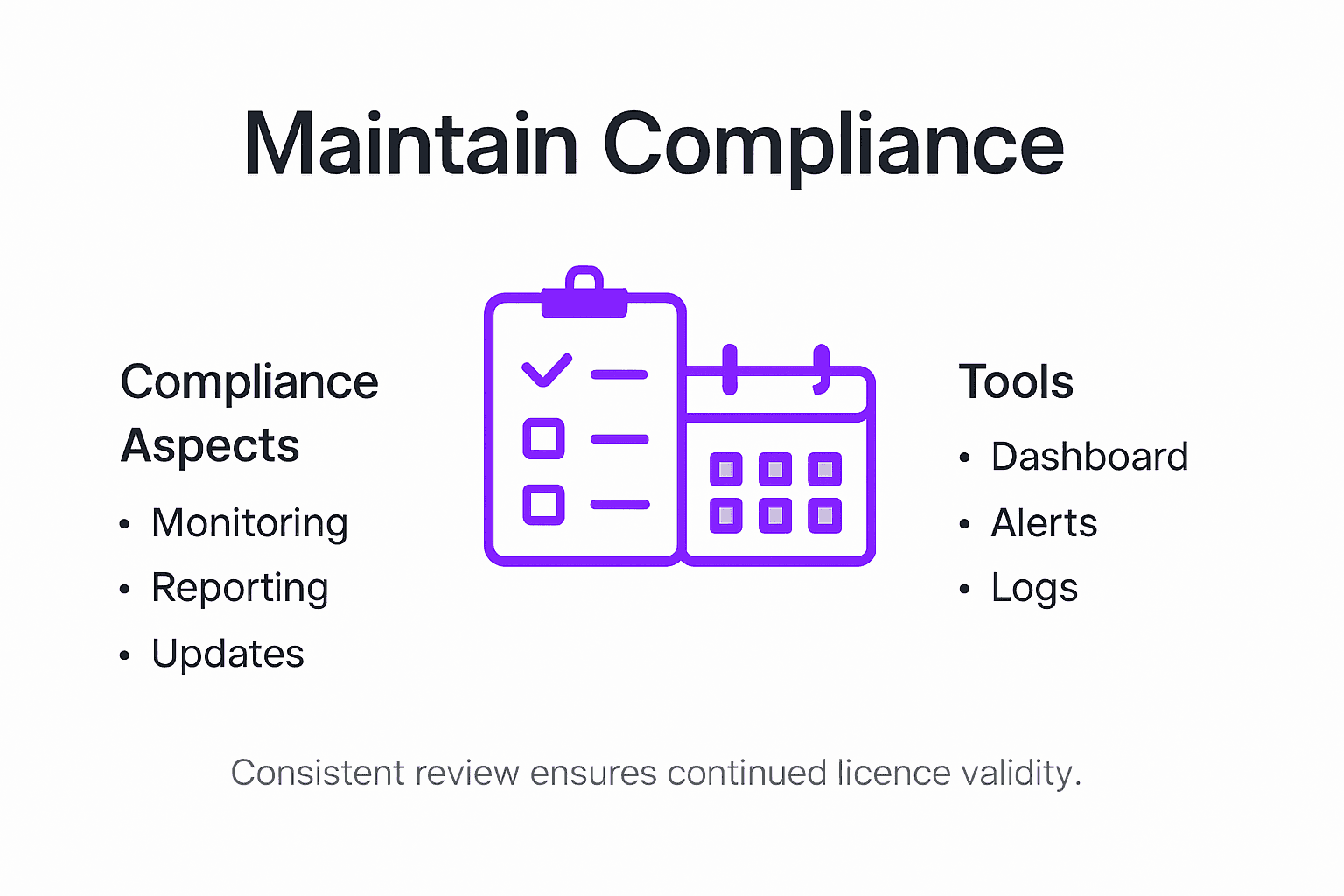
Documentation and transparent reporting form the backbone of sustained compliance. Financial compliance strategies for high risk sectors emphasise the importance of maintaining meticulous records, conducting regular training programmes for staff, and establishing clear communication channels with regulatory authorities. Develop comprehensive compliance dashboards that provide real time insights into your regulatory adherence, enabling swift identification and remediation of potential compliance gaps.
Expert Tip: Create an automated compliance tracking system that generates quarterly compliance health reports, integrating regulatory updates and internal audit findings to provide a holistic view of your organisational compliance status.
Simplify Your Financial Licence Journey with Expert Legal Support
Navigating the complex and ever-changing regulatory world of financial licensing can feel overwhelming. From meeting stringent anti money laundering standards to preparing detailed compliance documents your challenges are unique and your commitment to precision is vital. At NUR Legal we understand the pressure of maintaining absolute compliance while managing your business growth in dynamic sectors like fintech and crypto.
Benefit from our specialised services. We offer comprehensive assistance in obtaining financial licences across multiple jurisdictions, backed by strong regulatory relationships and expert insights. Whether you need help with document preparation, legal opinions, or managing ongoing regulatory requirements our team ensures clarity efficiency and confidence every step of the way.
Ready to take the next crucial step in securing your financial licence with trusted expertise? Visit NUR Legal today to explore our tailored licensing solutions and start building a legally compliant operation. Discover how our financial licensing services can turn complex regulation into your competitive advantage. Do not wait for compliance risks to escalate contact us now to accelerate your application and safeguard your business future.
Frequently Asked Questions
What are the first steps to obtain a financial licence?
To obtain a financial licence, begin by assessing the regulatory requirements specific to your industry. Conduct thorough research on compliance frameworks relevant to your financial services, ensuring you map out the legal obligations within each jurisdiction where you plan to operate.
What documents do I need to prepare for my financial licence application?
You will need to compile a comprehensive portfolio of essential corporate and compliance documentation. This includes business registration papers, financial statements proving capital adequacy, compliance policy frameworks, and detailed management team documentation, all tailored to meet the requirements of your specific regulatory authority.
How can I ensure my financial licence application is accurate?
To ensure your application is accurate, leverage established authorisation processes and protocol guidelines provided by regulatory bodies. Double-check every section of your application for completeness and clarity, and consider seeking a legal review to catch any potential errors before submission.
How should I engage with regulators during the application process?
Engage with regulators by establishing clear communication channels and being proactive in your interactions. Prepare specific questions regarding regulatory requirements, document every discussion, and follow up promptly with additional information or clarifications as needed to demonstrate your commitment to compliance.
What ongoing compliance measures should I implement after receiving my financial licence?
After receiving your licence, implement a robust ongoing compliance framework that includes regular monitoring of regulatory changes and internal audits. Create a compliance tracking system to generate quarterly reports, ensuring you stay aligned with evolving regulations and immediate identification of any compliance gaps.
Recommended


Comments