
Legal Compliance Steps Adult Industry: Guide to Safe Operations


Only a small fraction of british adult entertainment businesses remain fully compliant as regulations tighten worldwide. For operators in high-risk regions, the threat of serious penalties and business disruptions is growing along with complex legal requirements at every jurisdictional level. This resource lays out crucial strategies that help you secure the right licences, implement robust compliance checks, and stay ahead of rapid regulatory shifts so your enterprise can operate with confidence.
Table of Contents
Quick Summary
Essential Insight | Detailed Explanation |
1. Conduct Thorough Research | Examine federal, state, and local regulations for adult entertainment to ensure compliance. |
2. Compile Extensive Documentation | Collect necessary identification records, background checks, and permits specific to your jurisdiction for licensing. |
3. Implement Multi-layered Age Verification | Use robust identification and verification systems while preserving user privacy to prevent underage access. |
4. Monitor Regulatory Changes Actively | Establish a system for tracking legal updates to stay ahead of industry regulations and avoid violations. |
5. Regularly Perform Compliance Audits | Schedule ongoing compliance audits to verify adherence to laws and adapt to any regulatory changes effectively. |
Step 1: Assess applicable regulations and licensing needs
Understanding the legal landscape for adult entertainment operations requires meticulous research and strategic planning. The regulatory environment demands comprehensive compliance evaluation across multiple jurisdictions, with requirements varying significantly between local and national levels.
Operators must conduct thorough due diligence by examining federal, state, and municipal regulations that impact adult entertainment businesses. This involves mapping out specific licensing requirements which typically encompass health standards, zoning restrictions, employment classifications, and workplace safety protocols. Specific considerations include analysing local ordinances regarding venue locations, understanding consent and personal boundary legal frameworks, and verifying specific permit requirements for adult entertainment establishments.
Each jurisdiction presents unique challenges, necessitating a granular approach to legal compliance. Research must extend beyond surface level requirements to include nuanced workplace protection statutes, potential alcohol sales regulations, and First Amendment considerations that might impact operational freedoms.
Professional Guidance: Engage a specialised legal consultant with expertise in adult entertainment regulations to conduct a comprehensive jurisdictional risk assessment and streamline your compliance strategy.
Here is a comparison of key licensing requirements across different regulatory levels:
Regulatory Level | Main Focus Areas | Example Requirement |
Local Authority | Zoning, venue location | Restrictions on proximity to schools |
State/Regional | Employment, safety | Employee background checks required |
National/Federal | Health, rights | Adherence to workplace safety laws |
Step 2: Acquire necessary licences and business documentation
Navigating the complex world of business documentation and licensing for adult entertainment requires strategic and comprehensive preparation. Local governments impose stringent regulatory requirements for sexually oriented businesses, demanding precise compliance with municipal, state, and federal documentation standards.
Your licensing journey involves multiple critical steps. You will need to compile an extensive documentation portfolio that typically includes secured identification records, comprehensive background checks, notarised affidavits, and individualised permits for both owners and employees. Individual municipal licensing processes often demand specific documentation, with each jurisdiction potentially imposing unique requirements regarding location restrictions, operational hours, and staff qualifications.

Beyond basic business registration, adult entertainment establishments must obtain specialised permits addressing community concerns and legal standards. This involves preparing detailed documentation demonstrating compliance with zoning regulations, health standards, workplace safety protocols, and individual employee certification requirements. Thorough documentation serves as your legal shield, minimising potential regulatory risks and ensuring smooth operational continuity.
Professional Guidance: Maintain meticulous digital and physical document archives, creating redundant backups and tracking expiration dates for all licences and permits to prevent inadvertent regulatory violations.
Step 3: Implement effective compliance and age verification procedures
Protecting minors and maintaining legal compliance demands a sophisticated approach to age verification systems that balance privacy and effectiveness. Your strategy must incorporate multiple layers of verification designed to prevent underage access while preserving user privacy and operational integrity.
Effective age verification requires implementing robust authentication mechanisms that go beyond simple checkbox systems. Policymakers recommend utilising government-issued identification, trusted third-party verification services, and advanced technological solutions such as facial recognition or cryptographic protocols. Comprehensive age verification protocols should integrate minimal data collection principles, ensuring that you collect only essential information required for legal compliance while protecting individual privacy rights.
Your verification process must incorporate multiple authentication layers including document validation, biometric cross-referencing, and real-time verification technologies. This multi-tiered approach helps mitigate potential fraud risks while maintaining a seamless user experience for legitimate adult users. Regularly updating your verification technologies and staying informed about emerging regulatory requirements will be crucial to maintaining ongoing legal compliance and operational effectiveness.
Professional Guidance: Develop a comprehensive documentation trail for your age verification processes, ensuring you can demonstrate rigorous compliance mechanisms if regulatory scrutiny occurs.
The following table outlines core components of an effective age verification strategy:
Component | Primary Purpose | Typical Implementation |
Document Validation | Confirm legal age | Scan government ID |
Biometric Checks | Cross-reference identification | Facial recognition |
Real-time Verification | Prevent fraud | Live match with database |
Minimal Data Collection | Safeguard user privacy | Delete data post-verification |
Step 4: Monitor ongoing regulatory changes and industry updates
Staying ahead of regulatory shifts requires a strategic and systematic approach to tracking legal developments in the adult entertainment industry. Regulatory tracking tools help businesses anticipate and respond to emerging policy changes by providing comprehensive insights into proposed and enacted rules across different governmental jurisdictions.
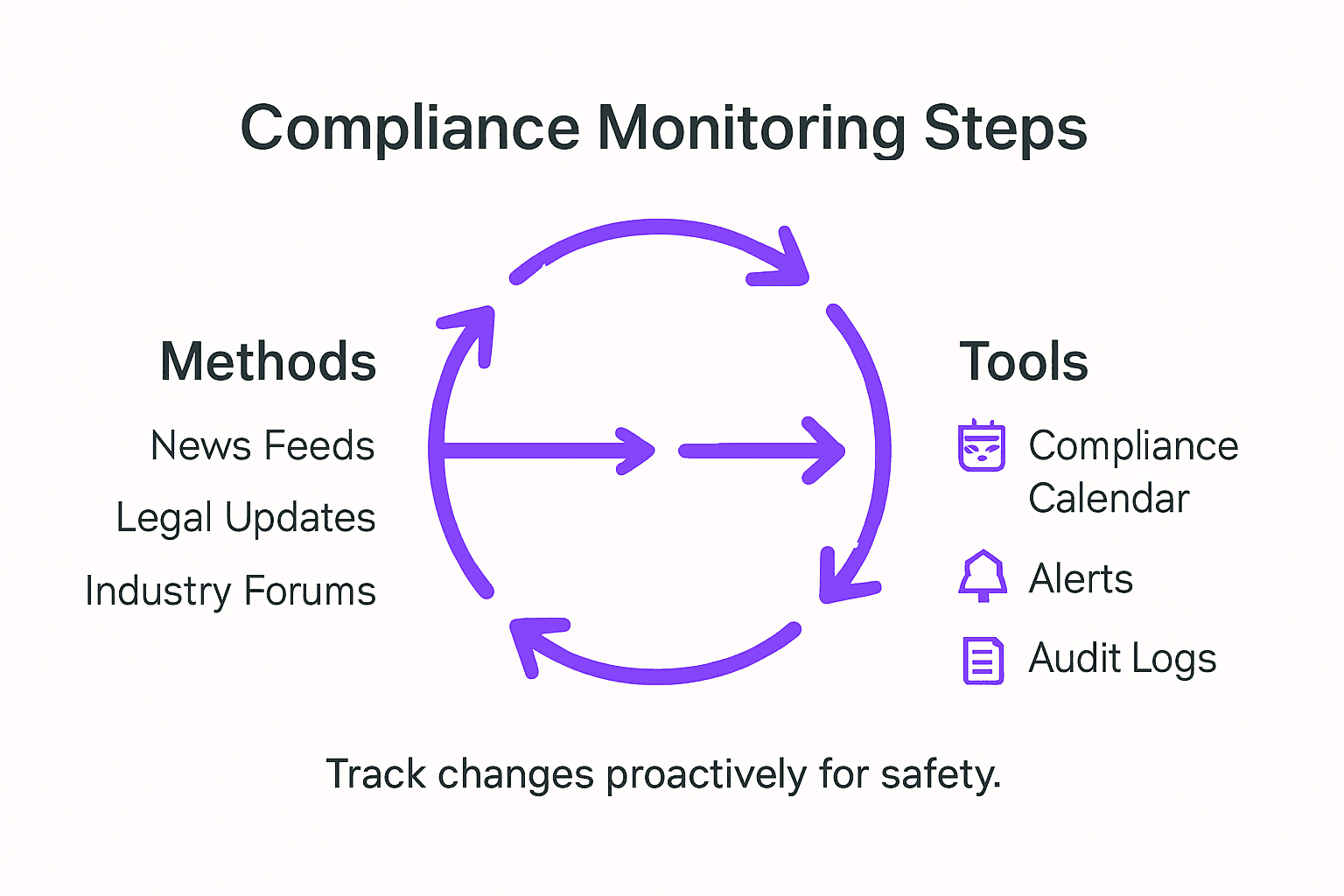
Your monitoring strategy should incorporate multiple information channels including official government publications, professional legal networks, industry associations, and specialised regulatory tracking platforms. The OECD Regulatory Policy Outlook emphasises the importance of proactive engagement with regulatory trends, recommending businesses develop adaptive frameworks that can quickly incorporate new compliance requirements. This means establishing dedicated resources for continuous legal research, subscribing to relevant regulatory newsletters, attending industry conferences, and maintaining direct communication channels with legal experts specialising in adult entertainment regulations.
Implementing a comprehensive monitoring system involves creating a structured approach to collecting, analysing, and responding to regulatory updates. This includes developing internal protocols for rapid assessment of new regulations, conducting periodic compliance audits, and maintaining flexible operational procedures that can be quickly adjusted in response to legal changes. Regular training for management and staff on emerging regulatory trends will be crucial in maintaining ongoing legal compliance and operational resilience.
Professional Guidance: Create a dedicated compliance calendar that tracks key regulatory milestones, review periods, and potential legislative changes to ensure proactive rather than reactive legal management.
Step 5: Verify full compliance through audits and legal review
Comprehensive compliance verification is crucial for maintaining legal integrity and operational safety in the adult entertainment industry. Compliance audits provide a systematic approach to verifying adherence to regulatory requirements, identifying potential risks and recommending strategic corrective actions.
Your audit process should follow international standards for thorough and professional evaluation. Implementing robust compliance audit frameworks requires meticulous planning, evidence gathering, and professional assessment of your organisation’s regulatory alignment. This involves conducting comprehensive internal reviews that examine documentation, operational procedures, employee practices, and adherence to specific industry regulations.
Effective legal reviews demand a proactive and detailed approach. You will need to engage specialised legal counsel experienced in adult entertainment regulations to conduct in depth assessments. This includes reviewing current documentation, identifying potential compliance gaps, evaluating historical operational records, and developing strategic recommendations for maintaining ongoing regulatory alignment. Regular audits should be scheduled to ensure continuous compliance and adaptability to evolving legal landscapes.
Professional Guidance: Develop a standardised audit checklist that encompasses all critical regulatory areas and update it quarterly to reflect the most recent legal developments.
Navigate Legal Compliance with Confidence in the Adult Industry
Operating in the adult entertainment sector brings complex legal challenges including licensing, regulatory compliance, and stringent age verification requirements. This article highlights crucial steps such as assessing applicable regulations, securing necessary licences, and maintaining ongoing compliance through audits and monitoring regulatory changes. If you are striving to build a safe, fully compliant operation but face hurdles with intricate jurisdictional demands or evolving laws, expert legal guidance is essential.
At NUR Legal, we specialise in helping businesses in high-risk industries like adult entertainment master these complexities. Our services include comprehensive licensing acquisition, tailored compliance solutions, and continuous legal support to ensure you meet all regulatory standards globally. With proven expertise in obtaining complex licences and navigating shifting frameworks, we provide you with peace of mind and operational resilience. Do not wait until regulatory risks become liabilities. Visit our legal consultancy page today and take the next step toward establishing legally secure and scalable adult entertainment operations.
Frequently Asked Questions
What are the initial steps to assess legal compliance in the adult industry?
To assess legal compliance, begin by researching regulations and licensing needs specific to your location. Establish a compliance evaluation that reviews federal, state, and municipal regulations, ensuring you identify any health standards and zoning restrictions relevant to your operations.
How do I acquire the necessary licences and documentation for adult entertainment?
To acquire necessary licences and documentation, compile an extensive portfolio including identification records and background checks. Submit specific permits according to your local authority’s requirements, ensuring all documentation aligns with zoning and health regulations.
What mechanisms should I implement for age verification in my business?
Implement robust age verification systems, such as scanning government-issued identification and using biometric checks. Ensure you establish multiple layers of verification and adhere to data privacy principles by limiting the information collected to only what is essential.
How can I monitor ongoing regulatory changes affecting the adult industry?
To effectively monitor regulatory changes, utilise various sources such as official publications and industry associations. Set up a structured approach to track updates, ensuring you conduct periodic compliance audits and stay informed through newsletters or conferences.
What does a comprehensive compliance audit involve?
A compliance audit should systematically verify adherence to all regulatory requirements by reviewing documentation and operational procedures. Conduct regular internal audits to identify risks and potential gaps, aiming for a thorough assessment at least once a year.
Recommended


Comments