
Operational Compliance: Why It Matters in High-Risk Sectors


Most british fintech and online gambling startups underestimate the scale of operational compliance needed to avoid regulatory setbacks. With over 40 percent of high-risk sector fines tied to compliance failures, even minor gaps can threaten market entry and business continuity. Understanding the strategic framework behind operational compliance gives compliance officers and legal advisors the clarity to align operations, anticipate new requirements, and minimize risks across complex, multi-jurisdictional environments.
Table of Contents
Key Takeaways
Point | Details |
Operational Compliance is Strategic | It is a framework that protects organisational integrity and transforms compliance into a competitive advantage. |
Integrate Technology and Expertise | Effective strategies utilise predictive analytics and automated systems alongside human collaboration to ensure compliance resilience. |
Dynamic Governance, Risk, and Compliance (GRC) Frameworks | GRC frameworks must adapt continuously to address evolving regulations, especially in high-risk sectors. |
Cultural Transformation is Essential | Organisations should foster a risk-first mindset that integrates compliance within every level of operation for sustainable success. |
Operational Compliance Defined and Debunked
Operational compliance represents a sophisticated strategic framework designed to safeguard businesses operating within complex regulatory environments. At its core, compliance transcends mere rule-following and emerges as a dynamic mechanism for protecting organisational integrity. Operational compliance enables firms to create a positive compliance culture while simultaneously mitigating potential legal, financial, and reputational risks.
In high-risk sectors like fintech and online gambling, operational compliance becomes a critical defensive strategy. The framework encompasses rigorous processes that track, analyse, and respond to regulatory changes across multiple jurisdictions. Organisations must develop adaptive mechanisms that not only monitor current regulations but anticipate future legislative shifts. This proactive approach distinguishes exceptional compliance programmes from merely reactive ones, transforming regulatory adherence from a potential burden into a competitive advantage.
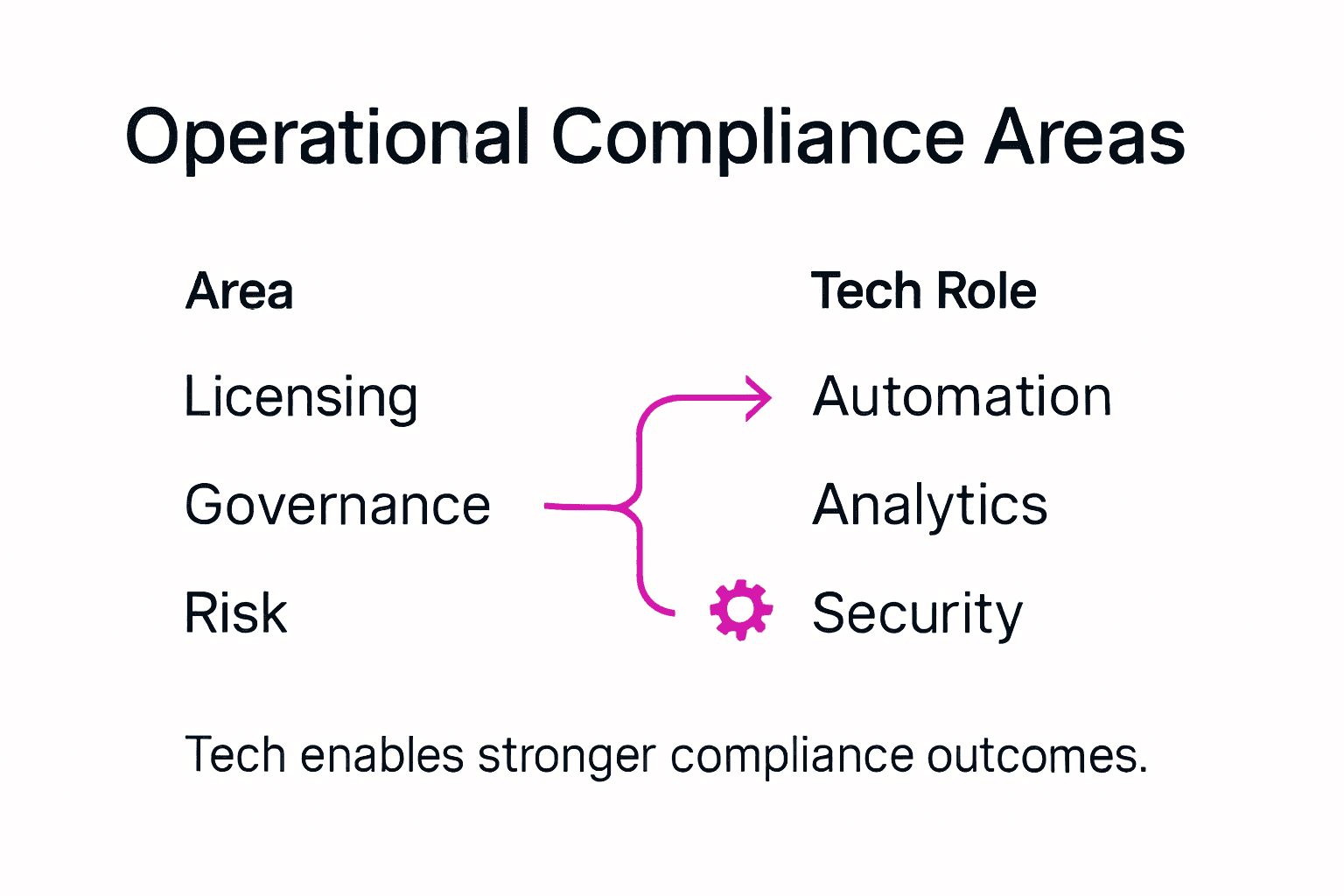
The most effective operational compliance strategies integrate technological solutions with human expertise. Advanced predictive analytics, automated monitoring systems, and cross-functional team collaboration are key components. These approaches help organisations maintain operational resilience while navigating complex regulatory landscapes, ensuring that businesses can respond swiftly and strategically to emerging compliance challenges.
The table below summarises how advanced technology enhances key aspects of operational compliance:
Compliance Area | Role of Technology | Resulting Business Value |
Regulatory Monitoring | Automated tracking tools | Faster identification of new rules |
Risk Management | Predictive analytics | Early detection of potential threats |
Reporting & Documentation | Digital record-keeping systems | Improved accuracy and audit trails |
Training & Awareness | E-learning and simulation modules | Consistent upskilling across teams |
Expert Tip: Invest in continuous training programmes that help your compliance team develop both technological skills and deep regulatory knowledge to stay ahead of evolving industry standards.
Core Types and Functions in Regulated Markets
In high-risk regulatory environments, Governance, Risk, and Compliance (GRC) frameworks serve as the fundamental infrastructure for managing complex operational challenges. These sophisticated frameworks embed governance mechanisms, risk management strategies, and compliance protocols into organisational systems, enabling businesses to systematically navigate intricate regulatory landscapes.

The core functions of GRC frameworks vary significantly across different industries, adapting to specific organisational characteristics such as size, maturity, and financial sustainability. Regulatory markets demand nuanced approaches that focus on risk continuity, cost-effectiveness, and comprehensive oversight. Modern governance models like the Three Lines Model provide clear operational roles and responsibilities, addressing corporate governance and risk control challenges while ensuring robust compliance mechanisms.
Specifically for high-risk sectors such as fintech and online gambling, GRC frameworks must be dynamic and adaptable. These frameworks are not static documents but living systems that require continuous monitoring, updating, and strategic refinement. By integrating advanced technological solutions with human expertise, organisations can transform regulatory compliance from a potential administrative burden into a strategic competitive advantage.
Expert Tip: Develop a flexible GRC framework that can quickly adapt to regulatory changes by implementing regular training, technological upgrades, and cross-functional communication strategies.
Legal Frameworks Governing Compliance Globally
Global legal frameworks represent a complex network of regulatory mechanisms designed to ensure operational integrity across high-risk industries. Regulatory bodies like the European Banking Authority and Basel Committee establish comprehensive guidelines that mandate robust operational risk management strategies, addressing critical challenges such as fraud prevention, cybersecurity, and strategic outsourcing risks.
These international regulatory frameworks extend far beyond simple rule enforcement. Organizations must develop enterprise-wide compliance controls that align with specific risk appetites and strategic objectives, creating sophisticated mechanisms to manage non-financial risks including technological failures, potential misconduct, and potential regulatory breaches. The frameworks demand holistic approaches that integrate governance, technological safeguards, and comprehensive risk management protocols.
In high-risk sectors like fintech and online gambling, compliance frameworks become particularly nuanced. Organisations must navigate multiple jurisdictional requirements, understanding that legal compliance is not a static concept but a dynamic, continuously evolving process. This requires building adaptive systems capable of responding swiftly to regulatory changes, technological disruptions, and emerging global financial risks.
Expert Tip: Develop a cross-functional compliance team with diverse expertise in legal, technological, and risk management domains to create a truly resilient operational framework.
Key Requirements for Licensing and Operation
Licensing and operational compliance represent a sophisticated framework of regulatory requirements that extend far beyond simple bureaucratic processes. Organisations must proactively embrace emerging regulations by establishing robust compliance cultures that leverage advanced technological capabilities, ensuring comprehensive risk management and regulatory alignment.
The core requirements for licensing in high-risk sectors like fintech and online gambling involve multiple critical components. These include detailed risk assessments, implementation of predictive risk intelligence systems, continuous regulatory monitoring, and maintaining stringent documentation trails. Successful compliance demands a holistic approach that integrates technological solutions with deep regulatory understanding, creating adaptive mechanisms that can respond swiftly to changing legal landscapes.
Specifically, licensing frameworks require organisations to demonstrate comprehensive operational controls, robust governance structures, and transparent risk management protocols. This means developing sophisticated internal systems that not only meet current regulatory standards but anticipate future compliance challenges. Organisations must cultivate a proactive compliance culture that involves cross-departmental collaboration, ongoing training, and a commitment to maintaining the highest standards of operational integrity.
Expert Tip: Develop a dynamic compliance roadmap that includes regular internal audits, continuous staff training, and flexible technological infrastructure to ensure ongoing regulatory alignment.
Risks, Costs and Common Compliance Pitfalls
Operational compliance carries significant financial and reputational risks that extend far beyond simple regulatory adherence. Organisations face potential financial penalties, cyber-attack vulnerabilities, and substantial operational disruptions if compliance frameworks are not rigorously implemented, creating complex challenges for high-risk industry sectors.
Hidden compliance costs often emerge through fragmented risk management strategies, inadequate technological infrastructure, and siloed organisational approaches. These challenges manifest through increased legal liabilities, regulatory fines, and potential system failures that can dramatically impact an organisation’s financial stability and market reputation. Common pitfalls include underestimating digital risks, failing to integrate compliance mechanisms within core operational processes, and maintaining poor interdepartmental communication.
In high-risk sectors like fintech and online gambling, compliance risks are particularly nuanced. Organisations must develop sophisticated, adaptive frameworks that anticipate regulatory shifts, leverage advanced analytics, and create robust cross-functional collaboration mechanisms. This requires a fundamental shift from viewing compliance as a cost centre to recognising it as a strategic business enabler that can protect and potentially enhance organisational performance.
Expert Tip: Create a dedicated cross-functional compliance team with representatives from legal, technology, and operations departments to develop a holistic and proactive risk management approach.
Best Practices for Sustainable Compliance Operations
Sustainable compliance operations demand a sophisticated approach that transcends traditional regulatory adherence. Organisations must embrace technological innovations, including advanced automation and predictive analytics, to create dynamic compliance frameworks that support rather than constrain business objectives.
Operational resilience becomes critical when developing sustainable compliance strategies, requiring organisations to differentiate and integrate multiple resilience approaches that enable flexibility and rapid response to emerging regulatory challenges. This means developing comprehensive risk assessment methodologies, establishing clear governance structures, and creating adaptive mechanisms that can swiftly interpret and implement regulatory shifts across complex operational landscapes.
In high-risk sectors like fintech and online gambling, sustainable compliance necessitates a cultural transformation. Organisations must cultivate a risk-first mindset that permeates every operational layer, fostering collaboration between compliance, technology, and business units. This holistic approach involves continuous staff training, investment in sophisticated technological infrastructure, and developing cross-functional teams capable of navigating increasingly complex regulatory environments.
The following table contrasts traditional compliance approaches with modern, sustainable strategies:
Attribute | Traditional Compliance | Sustainable Compliance |
Approach | Rule-based and reactive | Risk-driven and proactive |
Use of Technology | Manual or siloed tools | Integrated, predictive tools |
Staff Involvement | Limited specialist focus | Cross-functional collaboration |
Agility | Slow to adapt | Rapid response capabilities |
Expert Tip: Implement quarterly cross-departmental compliance workshops that blend technological training, regulatory updates, and strategic risk management discussions to maintain an agile and informed organisational approach.
Strengthen Your Operational Compliance with Expert Legal Support
Navigating the complexities of operational compliance in high-risk sectors such as fintech and online gambling requires more than just understanding regulations. The article highlights critical challenges including adapting to evolving legal frameworks, managing multi-jurisdictional licensing, and implementing risk-driven compliance strategies. Businesses face intricate demands like continuous regulatory monitoring, advanced risk management, and creating a culture of proactive compliance. Without specialised guidance, these challenges can lead to costly penalties and reputational harm.
At NUR Legal, we provide tailored legal consultancy designed to meet these exact challenges, offering comprehensive solutions including licensing services for crypto and gaming sectors, company formation, legal opinions, and contract reviews. Our ability to deliver fast and affordable licensing, such as Curaçao or Anjouan full gaming licences and crypto licences in Georgia and Seychelles, empowers your business to build a resilient compliance framework that aligns with global regulatory standards.
Elevate your compliance strategy today by partnering with trusted experts who understand the high-risk market dynamics. Discover how NUR Legal can help you achieve operational integrity and regulatory success with confidence.
Take control of your compliance journey now and secure your business future.
Explore our services and licensing solutions at NUR Legal.
Ready to build a legally compliant operation that adapts to regulatory changes and minimises risks? Visit NUR Legal to start your licensing and compliance process with professional support tailored for high-risk sectors.
Frequently Asked Questions
What is operational compliance in high-risk sectors?
Operational compliance refers to a strategic framework that ensures businesses adhere to complex regulations specific to high-risk industries. It goes beyond mere rule-following by fostering a culture of compliance that protects organisational integrity and mitigates legal, financial, and reputational risks.
Why is operational compliance important for businesses in sectors like fintech and online gambling?
In high-risk sectors such as fintech and online gambling, operational compliance serves as a critical defensive strategy. It helps companies navigate intricate regulatory environments, anticipate legislative changes, and avoid penalties or reputational damage, which can significantly impact their operations.
How can technology enhance operational compliance?
Technology improves operational compliance through automated monitoring, predictive analytics, and digital record-keeping. These tools help organisations track regulatory changes in real-time, detect potential risks early, and maintain accurate documentation, ensuring ongoing compliance and operational resilience.
What are common pitfalls organisations face in operational compliance?
Common pitfalls include fragmented risk management strategies, inadequate technological infrastructure, and poor interdepartmental communication. These issues can lead to hidden costs, legal liabilities, and increased operational disruptions, underscoring the importance of an integrated compliance approach.
Recommended


Comments