
Role of Compliance in Fintech – Minimising Risks and Enabling Growth


Most advice about fintech compliance misses just how fast the rules can shift, especially when British organisations are expanding globally. Regulatory demands now touch everything from anti-money laundering to deep data protection, putting pressure on even established firms. For those navigating this landscape, understanding how compliance frameworks operate is more than a box to check—it is a key safeguard against financial penalties and reputational damage, impacting more than 90 percent of fintech startups by their third year.
Table of Contents
Key Takeaways
Point | Details |
Comprehensive Compliance Frameworks | Fintech organisations must implement robust compliance frameworks that address regulatory standards and risk management effectively. |
Global Regulatory Variations | Different regions have unique regulatory approaches that fintech companies need to adapt to for successful operations. |
Technological Innovations in Compliance | Leveraging machine learning and AI can streamline compliance processes and reduce operational risks. |
Proactive Risk Management | Developing dynamic risk assessment frameworks is essential to mitigate potential legal and operational vulnerabilities in fintech environments. |
Defining Compliance in Fintech Environments
Compliance in fintech environments represents a comprehensive operational framework designed to ensure financial technology organisations adhere to regulatory standards, legal requirements, and ethical practices. This intricate system goes far beyond mere rule-following, acting as a critical mechanism for risk management and sustainable business growth.
At its core, fintech compliance involves multiple interconnected dimensions. Financial technology firms must navigate complex regulatory landscapes that encompass anti-money laundering (AML) protocols, know-your-customer (KYC) verification processes, data protection standards, and cybersecurity safeguards. Regulatory technology continues to transform compliance efficiency by leveraging advanced technologies like machine learning and artificial intelligence to streamline these intricate verification processes.
The strategic implementation of robust compliance frameworks serves multiple crucial purposes. Beyond preventing potential legal infractions, effective compliance mechanisms protect organisations from significant financial penalties, reputational damage, and potential operational disruptions. Moreover, compliance acts as a foundational trust-building mechanism, signalling to customers, investors, and regulatory bodies that a fintech organisation maintains high operational integrity and commitment to ethical financial practices.
Practical Pro Tip: Invest in continuous compliance training and automated monitoring systems that can adapt quickly to evolving regulatory requirements, ensuring your organisation remains agile and proactively prepared for emerging legal challenges.
The following table summarises how key compliance technology features strengthen fintech organisations:
Compliance Technology Feature | Functionality | Business Impact |
Machine learning verification | Automates identity checks | Reduces onboarding time and errors |
AI-driven risk monitoring | Analyses transactions in real-time | Detects suspicious activity swiftly |
Automated reporting tools | Streamlines regulatory filings | Minimises manual effort and mistakes |
Continuous monitoring systems | Tracks compliance status constantly | Enhances response to regulatory changes |
Important Compliance Components:
Anti-Money Laundering (AML) protocols
Know Your Customer (KYC) verification
Data protection standards
Cybersecurity safeguards
Regular risk assessments
Transparent reporting mechanisms
Global Regulatory Frameworks for Fintech
Global regulatory frameworks for fintech represent a complex and dynamically evolving landscape of legal guidelines that govern financial technology operations across international jurisdictions. These frameworks aim to balance technological innovation with robust consumer protection, financial stability, and risk management strategies.
Regulatory approaches vary significantly across different global regions, with each jurisdiction developing unique strategies to address emerging financial technologies. The European Union, United States, and Asia Pacific regions have been particularly proactive in establishing comprehensive regulatory mechanisms that accommodate rapid technological advancements while maintaining stringent oversight. Jurisdictional variations play a critical role in shaping how fintech organisations structure their compliance and operational strategies.
The primary objectives of these global regulatory frameworks include protecting consumer interests, preventing financial crimes, ensuring data privacy, and promoting fair market competition. Regulatory bodies increasingly recognise the need for flexible frameworks that can adapt to emerging technologies such as blockchain, artificial intelligence, and decentralised finance platforms. These frameworks typically encompass multiple layers of regulatory requirements, including licensing protocols, reporting standards, capital adequacy rules, and cybersecurity mandates.
Practical Pro Tip: Develop a comprehensive regulatory mapping strategy that tracks compliance requirements across multiple jurisdictions, enabling your fintech organisation to proactively adapt to evolving legal landscapes and minimise potential regulatory risks.
Here is a comparison of global regulatory approaches in leading regions:
Region | Regulatory Approach | Unique Focus |
European Union | Harmonised directives | Strong data protection (GDPR) |
United States | Fragmented state/federal laws | Innovation with strict AML controls |
Asia Pacific | Mixed models, proactive adaptation | Encouraging digital finance startups |
Key Regulatory Considerations:
Jurisdiction-specific licensing requirements
Anti-money laundering protocols
Consumer protection standards
Data privacy and security regulations
Reporting and transparency mandates
Cross-border operational guidelines
Key Compliance Obligations and Requirements
Key compliance obligations represent the foundational legal and regulatory requirements that fintech organisations must meticulously implement to operate effectively and ethically within the financial technology ecosystem. These obligations encompass a comprehensive range of strategic frameworks designed to mitigate risks, protect stakeholders, and maintain operational integrity.

Modernising legal and regulatory frameworks involves developing sophisticated mechanisms for licensing entities, managing complex financial risks, and promoting legal certainty. Compliance obligations extend far beyond simple regulatory adherence, requiring organisations to implement robust internal systems that proactively identify, assess, and mitigate potential financial and operational vulnerabilities.
The core compliance requirements typically include stringent anti-money laundering (AML) protocols, comprehensive know-your-customer (KYC) verification processes, data protection standards, and sophisticated cybersecurity measures. Financial technology organisations must develop nuanced approaches that balance regulatory compliance with technological innovation, ensuring they can rapidly adapt to emerging regulatory landscapes while maintaining operational flexibility.
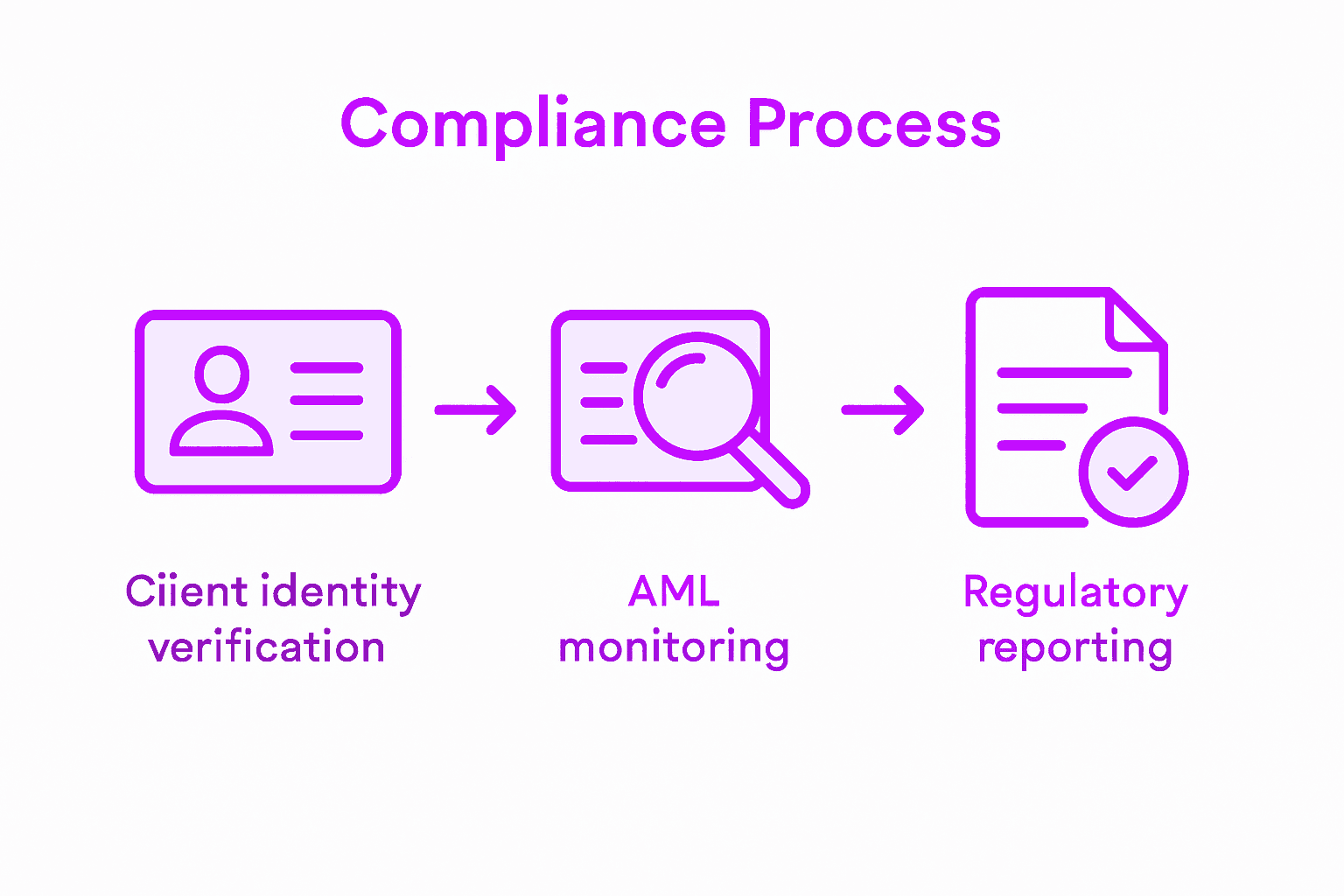
Practical Pro Tip: Implement a dynamic compliance management system that integrates automated monitoring tools, regular staff training programmes, and continuous regulatory update mechanisms to ensure your organisation remains agile and proactively prepared for evolving compliance challenges.
Core Compliance Obligation Categories:
Regulatory licensing requirements
Anti-money laundering protocols
Customer identification and verification
Financial transaction monitoring
Data privacy and protection
Cybersecurity risk management
Transparent reporting mechanisms
Common Risks and Legal Consequences
Fintech organisations face a complex landscape of risks that can potentially undermine their operational integrity, financial stability, and legal standing. These risks encompass multifaceted challenges ranging from technological vulnerabilities to regulatory non-compliance, each carrying significant potential for financial and reputational damage.
Cybersecurity risks represent a critical concern for financial technology institutions, with emerging technologies introducing unprecedented vulnerabilities. Technological risks include sophisticated threats such as AI-generated phishing attacks, deepfake-enabled fraud, algorithmic bias, and potential data misuse scenarios that can compromise organisational security and customer trust.
Legal consequences of non-compliance can be catastrophic, potentially resulting in substantial financial penalties, regulatory sanctions, loss of operational licences, and irreparable reputational damage. Fintech organisations must develop comprehensive risk management strategies that proactively identify, assess, and mitigate potential legal and operational vulnerabilities across multiple dimensions, including cybersecurity, data protection, financial crime prevention, and ethical technological deployment.
Practical Pro Tip: Develop a comprehensive risk assessment framework that includes regular independent security audits, continuous staff training on emerging technological risks, and robust incident response protocols to minimise potential legal and operational vulnerabilities.
Critical Risk Categories:
Cybersecurity vulnerabilities
Data privacy breaches
Algorithmic bias and discrimination
Fraudulent transaction risks
Regulatory non-compliance
Technological infrastructure failures
Emerging technological threat landscapes
Best Practices for Fintech Compliance Success
Achieving compliance success in the rapidly evolving fintech landscape requires a strategic, proactive approach that balances technological innovation with robust regulatory adherence. Financial technology organisations must develop comprehensive frameworks that anticipate regulatory challenges while maintaining operational flexibility and technological competitiveness.
Implementing dynamic regulatory strategies through innovative governance mechanisms has emerged as a critical best practice for fintech compliance. Regulatory sandboxes represent a sophisticated approach that enables organisations to test innovative technologies within controlled environments, allowing regulators to assess emerging financial solutions while providing companies with opportunities to refine their compliance mechanisms and technological implementations.
Successful fintech compliance strategies typically involve multi-layered approaches that integrate advanced technological solutions, continuous staff training, and agile regulatory monitoring systems. This requires developing robust internal processes that can rapidly adapt to changing regulatory landscapes, implement sophisticated risk management protocols, and maintain transparent communication channels with regulatory authorities. Organisations must cultivate a compliance culture that views regulatory adherence not as a restrictive obligation, but as a strategic opportunity for building organisational credibility and customer trust.
Practical Pro Tip: Establish a dedicated compliance innovation team responsible for continuously monitoring regulatory changes, conducting regular internal audits, and developing adaptive compliance frameworks that can quickly respond to emerging technological and regulatory challenges.
Key Compliance Best Practices:
Implement comprehensive technological monitoring systems
Develop adaptive regulatory frameworks
Invest in continuous staff training
Utilise regulatory sandbox mechanisms
Maintain transparent reporting processes
Foster a proactive compliance culture
Integrate advanced risk management technologies
Strengthen Your Fintech Compliance to Minimise Risks and Unlock Growth
Navigating the complex regulatory landscape and compliance obligations discussed in the article can feel overwhelming. Challenges such as anti-money laundering protocols, jurisdictional variations, and emerging technological risks require expert guidance to ensure your fintech business remains legally compliant and operationally agile. Achieving robust fintech compliance is essential to protect your company from legal penalties and reputational damage while signalling trust to customers and investors.
Trust NUR Legal to be your specialised partner in mastering these regulatory hurdles. With deep expertise in corporate licensing, compliance management, and legal support tailored to high-risk sectors, we help fintech startups and established businesses secure essential crypto and gaming licences across multiple jurisdictions like Curaçao, Georgia, and Seychelles.
Take control of your regulatory challenges now by partnering with our team of professionals who understand the critical importance of adaptive compliance frameworks, risk management, and regulatory monitoring. Visit NUR Legal today for advice on company formation and licensing solutions that turn compliance into your competitive advantage.
Frequently Asked Questions
What is fintech compliance?
Fintech compliance refers to the operational framework that ensures financial technology organisations adhere to regulatory standards, legal requirements, and ethical practices, enabling them to manage risks and promote sustainable growth.
Why is compliance important for fintech firms?
Compliance is crucial for fintech firms as it protects them from legal infractions, substantial financial penalties, and reputational damage, while also building trust with customers and regulatory bodies.
How do compliance technologies assist fintech organisations?
Compliance technologies, such as machine learning and AI, streamline critical processes like identity verification, risk monitoring, and regulatory reporting, reducing errors and enhancing efficiency in compliance management.
What are the main components of compliance in fintech?
Key components of compliance in fintech include anti-money laundering (AML) protocols, know-your-customer (KYC) verification, data protection standards, cybersecurity safeguards, and transparent reporting mechanisms.
Recommended


Comments